Food logging
How to use a food scale in grams, from bowl to diary
By Uptick3 min read
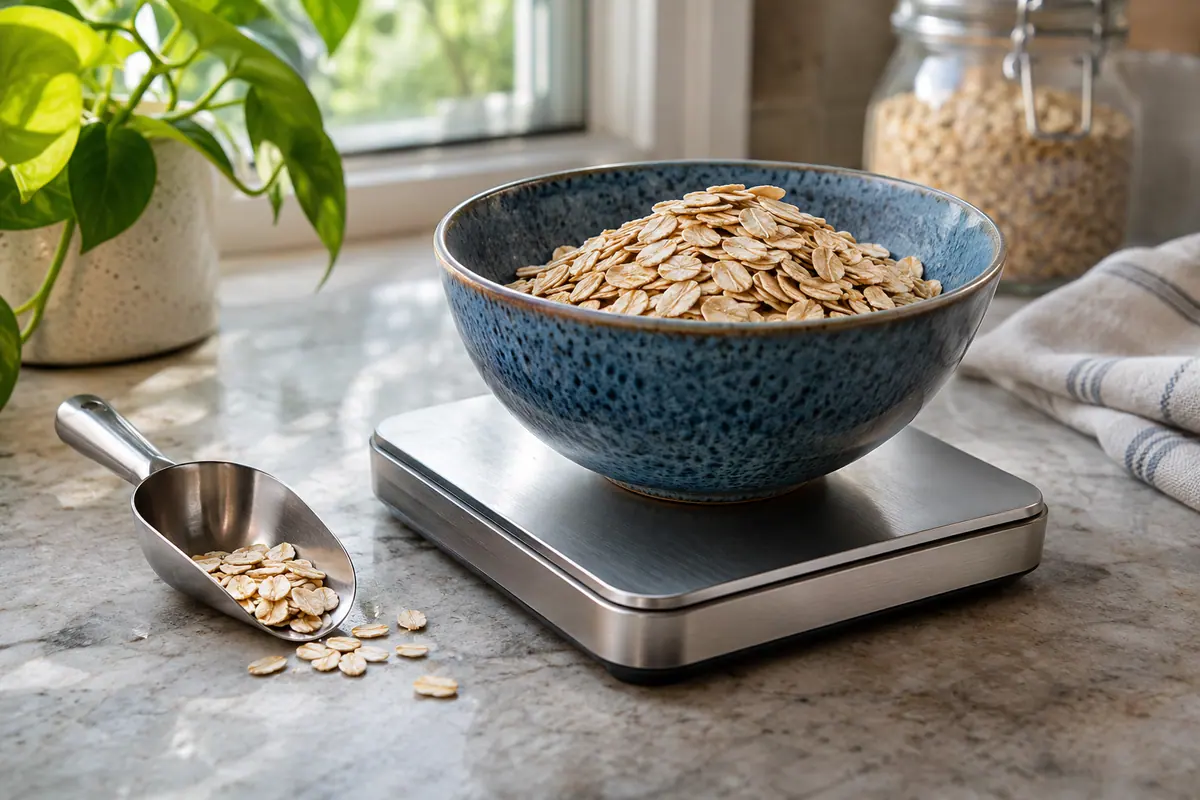
Put your bowl on the scale, set the unit to grams and press tare or zero. Add the food. The number on the display is the weight you can enter beside that food in your diary.
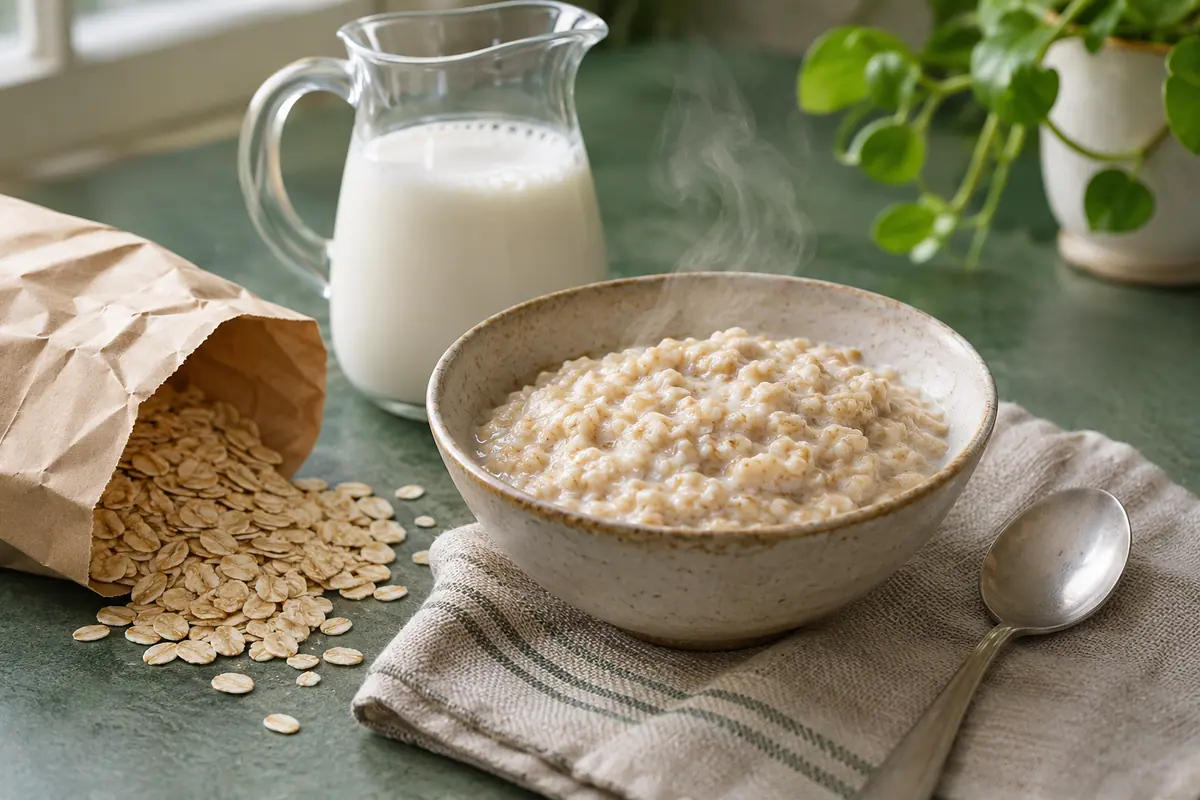
Try it first with something you make often. Oats in a breakfast bowl work well because you can weigh them dry, read the nutrition on the packet and carry on making breakfast in the same bowl.
Start with the bowl you will eat from
Set the scale on a firm, level surface with the whole bowl resting on the platform. A bowl leaning against a wall or touching a chopping board can take some of the weight off the scale. Choose g on the unit display and wait for the reading to settle.
Taring tells the scale to count the current weight as zero. If your empty bowl shows 315 g and pressing tare takes it to 0 g, you can pour in the oats. When the display reaches 45 g, that is 45 g of oats. The bowl has already been accounted for.
Forgot to press tare? If the bowl and oats together read 360 g and you know the empty bowl weighs 315 g, the difference is 45 g. Otherwise you can transfer the oats into another container, weigh the empty bowl and do the same subtraction.
Find the entry that matches what you weighed
For dry oats, select dry oats or the product on the packet. A bowl of cooked porridge includes the water or milk added to it. A diary entry for 45 g of prepared porridge describes a different portion from your 45 g of dry oats.
If the packet gives values per 100 g, 45 g is 0.45 of that amount. For a worked example, Quaker lists 370 kcal per 100 g for its UK Oat So Simple Original dry oats. A hypothetical 45 g portion works out to about 167 kcal before anything is added. Your own packet supplies the value for your oats.
A diary with a gram option can scale the entry for you. Choose grams and enter 45, or enter 0.45 if the defined serving is 100 g. Do either calculation once. Selecting the published 100 g values and then typing 45 servings is a quick route to an implausible breakfast.
Weigh an addition without dirtying another dish
For berries, leave the oats on the scale, note their weight, then press tare again. Add berries and record the new reading against berries. Repeat for another topping. Keep each ingredient’s number before resetting the display.
For peanut butter, put the open jar on the scale and tare it. Lift out a spoonful while the jar stays on the platform. A reading of −12 g means 12 g left the jar. That is a useful estimate for your bowl if you transfer the whole spoonful. Use a smaller amount if some stays on the spoon.
Keep the portion you actually use
Your breakfast can differ from the packet serving. Once you know the weight of your familiar scoop, you can save that breakfast and recheck it when the scoop, recipe or product changes. You decide when an extra measurement would help.