Food labels
As packaged or as prepared? Which label column to log
By Uptick3 min read
Choose “as packaged” or “as sold” when logging a product on its own, then add the milk, oil or other ingredients you used. Choose “as prepared” when you followed the preparation printed on the pack and the listed serving matches what you ate. That prepared figure already includes the specified additions.
Two columns can both be right and still describe different breakfasts. A UK porridge sachet gives a particularly clear example because the manufacturer publishes figures for the oats alone and for the same oats made with milk.
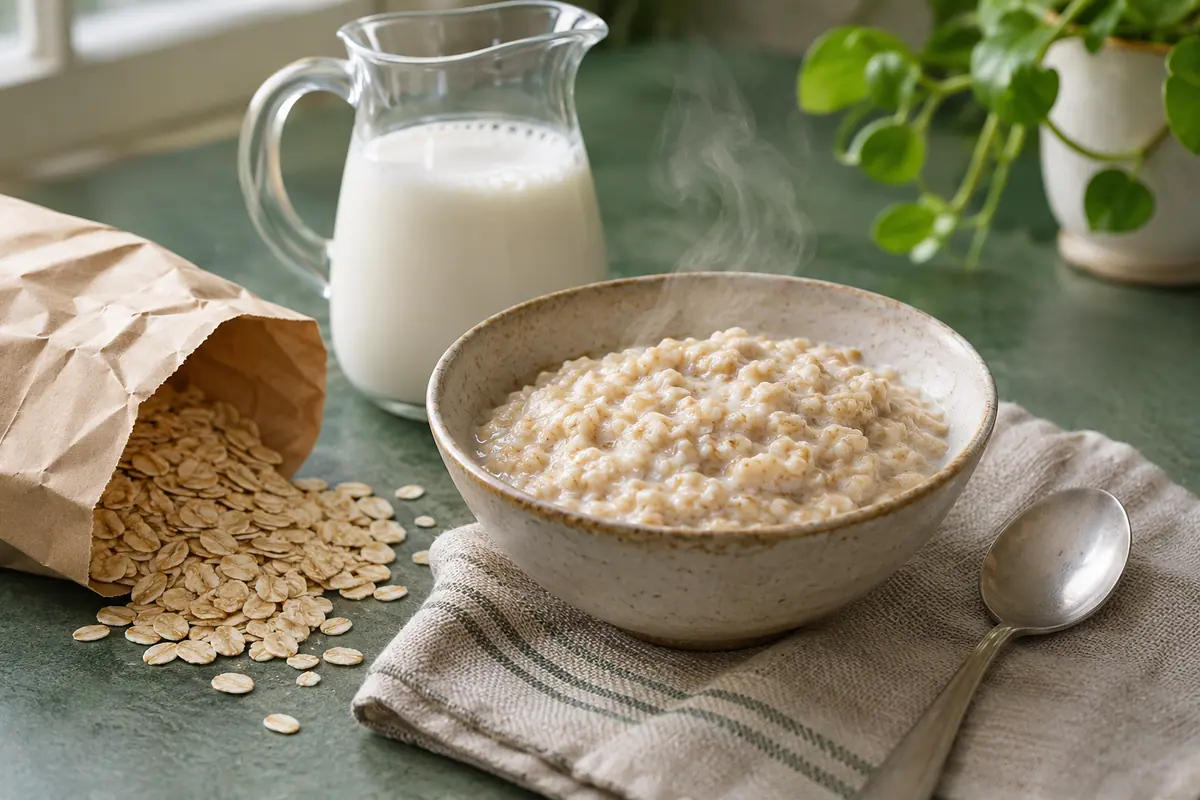
A 100 kcal sachet can also be a 180 kcal breakfast
On its UK Oat So Simple Original page, Quaker gives 100 kcal for one 27 g dry sachet. A second per-sachet column gives 180 kcal. The footnote explains that the second value includes 180 ml semi-skimmed milk. You can work out which meal the numbers describe without weighing the cooked bowl.
Notice that the serving heading still refers to the 27 g sachet. The prepared serving weighs more because it now contains milk. If you have eaten the complete bowl made as directed, record one prepared serving. Entering 27 g of cooked porridge could select a much smaller quantity.
| Quaker UK Original example | Energy | What it covers |
|---|---|---|
| One dry sachet (27 g) | 100 kcal | Oats in the packet |
| One sachet prepared as directed | 180 kcal | Oats plus 180 ml semi-skimmed milk |
Use the dry column when you change the recipe
If you make the porridge with plain water, the water adds weight without adding calories. The oats in this particular sachet still contribute 100 kcal. An extra banana, spoonful of nut butter or drizzle of honey can go into the diary as its own ingredient.
If you use a different drink, start with the 100 kcal dry sachet and add the amount from that drink’s own label. As a hypothetical example, 120 ml of a drink labelled 45 kcal per 100 ml adds 54 kcal. That makes 154 kcal before toppings. Using the 180 kcal prepared column and then adding 54 kcal would include two different milks.
Occasionally a pack only gives a prepared value. Look for an as-sold figure on the maker’s product page, or a matching dry-food entry with a clear source. Guessing the contribution of butter, milk or oil from a finished total is especially difficult when the recipe gives several preparation options.
Choose an entry you can recognise next time
A barcode can identify the oats, but it cannot identify the milk you poured. Look at the search result’s serving and compare its energy against the dry and prepared columns. For a frequent breakfast, a saved name such as “Original sachet with oat drink” makes the recipe behind the number clear.