Food labels
Convert kJ to calories for the portion you ate
By Uptick3 min read
To convert kilojoules to food calories, divide the kJ figure by 4.184. For example, 418.4 kJ is 100 kcal. To go the other way, multiply kcal by 4.184. On a food label, “Calories” usually means kilocalories, abbreviated kcal.
The unit conversion keeps the same serving size. If a packet says 840 kJ per 100 g and you eat 35 g, your portion has 294 kJ, or about 70 kcal. The converter handles both steps when you choose “Per 100 g”.
Convert label energy
Check the words above the number
Australian and New Zealand nutrition panels show average energy per serving and per 100 g, or per 100 mL for a liquid. Look across the energy row to find the column you need. If the panel already gives kcal for the same quantity, use that figure directly.
A 50 g packet can contain two listed servings of 25 g. If the energy is 420 kJ per serving and you eat the packet, you have two lots of 420 kJ. The total is 840 kJ, or about 201 kcal. The package size and serving size answer different questions.
Quick kJ to kcal reference
These rounded values are for whatever quantity the kJ number describes. A figure per bottle stays per bottle. A figure per 100 mL stays per 100 mL until you scale it.
| Energy in kJ | Approximate food calories |
|---|---|
| 100 kJ | 24 kcal |
| 500 kJ | 120 kcal |
| 1,000 kJ | 239 kcal |
| 2,000 kJ | 478 kcal |
Work through a drink measured in millilitres
Suppose a juice lists 180 kJ per 100 mL. A 250 mL glass contains 2.5 times the listed amount. Multiply 180 by 2.5 to get 450 kJ. Dividing by 4.184 gives about 108 kcal. You never need to know the weight of the juice for this calculation.
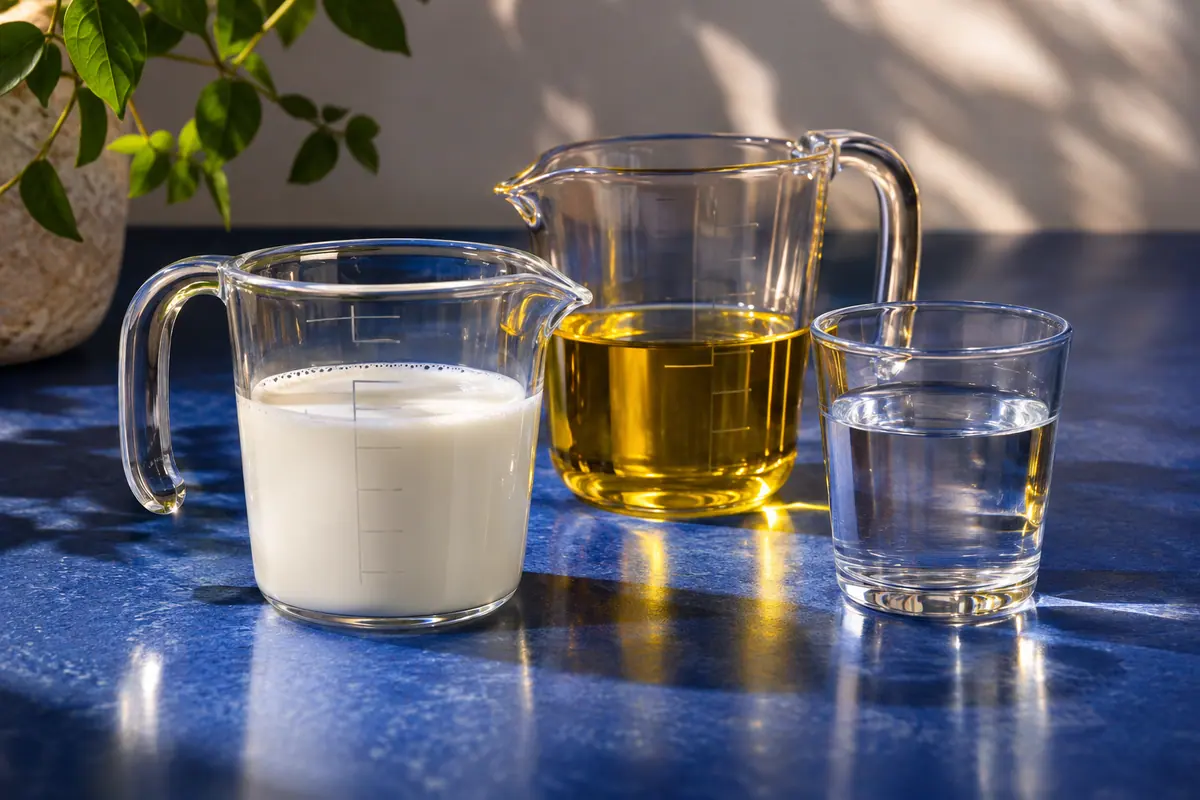
If you start with a per-100 g figure and know only the volume, find the weight or a suitable ingredient density before calculating. Water, oil and milk give different weights for the same volume.
What to enter when two totals differ slightly
The converter uses the thermochemical conversion of 4.184 kJ per kcal and rounds the displayed result. Food panels can use rounded values and prescribed energy factors. A small difference from the kcal printed on the pack is quite possible.
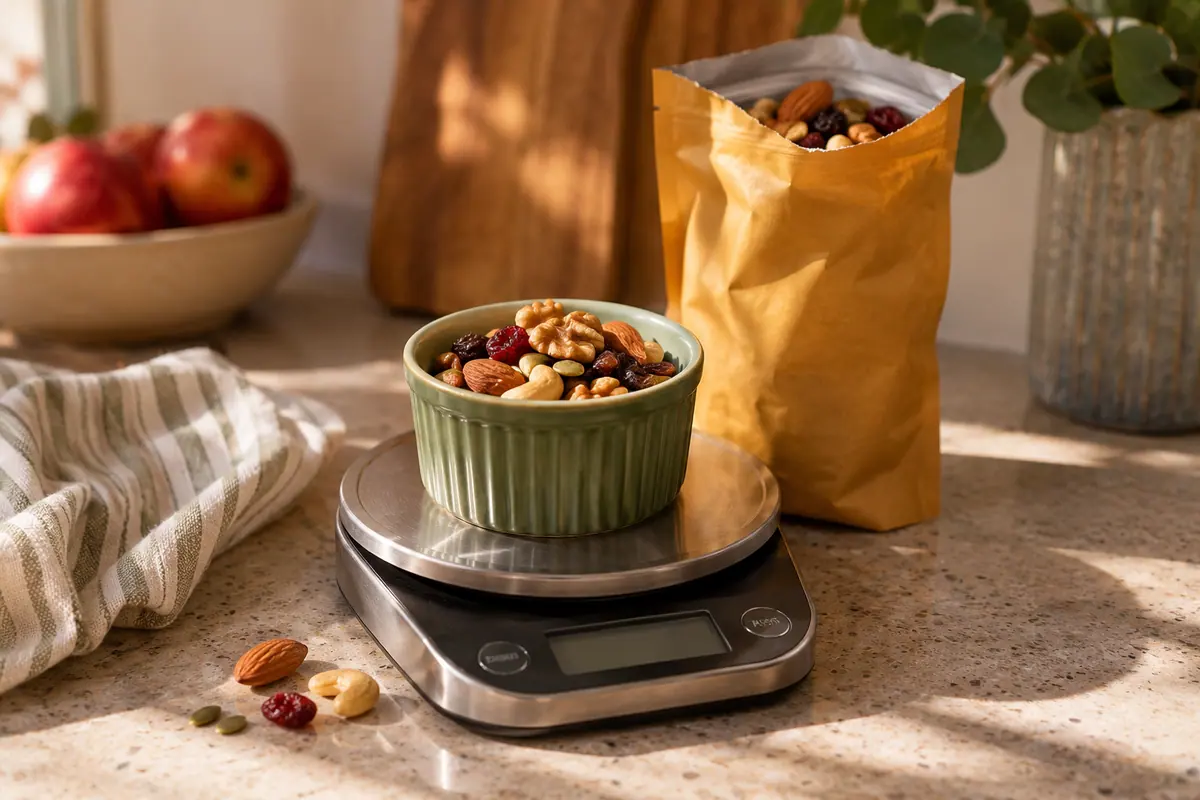
For a manual food entry, keep calories, fat, carbohydrate and protein on the same serving basis. If you enter figures per 100 g, enter the portion weight once. If you enter a total you have already scaled to one portion, use that one portion as the basis.